Filled to the brim with books from graphic novels to historical fiction, the library has something for everyone. Stella Cameron, one of the two librarians, got her start as an English teacher. After switching from the classroom, Cameron observed first-hand the impact that libraries can have on students. However, she argues students don’t use all of the resources the library offers.
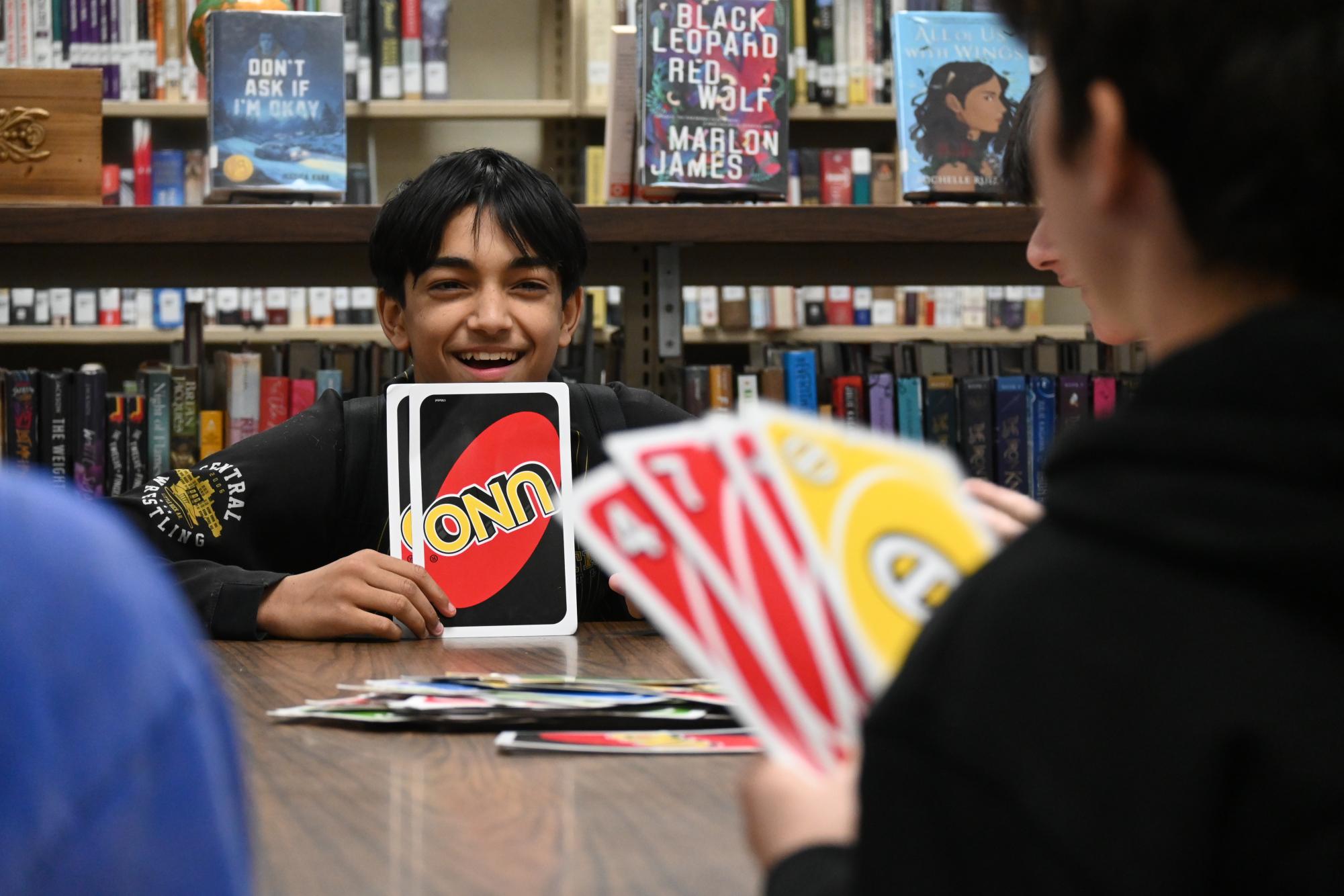
“I think our students do not take advantage of all the benefits. Just eat your lunch, and then come into the library. Sit down, read a book, read a magazine, play a game, play UNO with your friends–just anything to sort of unwind for a few minutes is beneficial,” Cameron said.
Senior Terry Brown has also noticed that his peers often overlook the library. For Brown, without his phone to stay connected to his friends, the library serves as a space to reconnect over a game of UNO.
“Ever since the removal of phones, it’s been really kind of hard to talk to them during the school day, or to see where everybody’s at or what classes they have,” Brown said. “Just to be able to have that time in the library, where we don’t have our phone, but we were able to still hang out and talk to each other and connect, it’s helped a lot.”
When she is not drafting literacy grants for the school, Cameron works closely with one of the library’s partnerships: The Little Rock Central High Memory Project. Taking inspiration from the Library of Congress’ American Memory Project, the club emerged from the 9th grade civics curriculum that tasked students with interviewing someone in their community who had suffered a civil rights violation.
The library is not only a place to read stories, it is also a place to ensure they are never lost. Among the library’s collection is the book published by members of The Memory Project, titled “Beyond Central, Towards Acceptance.” By retelling these stories, the library provides a way to preserve oral history that teaches future generations the mistakes of the past.
“We’re preserving civil and human rights. We’re trying to save stories,” Cameron said.
The library is not only a place to preserve history, it is also a space to access modern resources. Librarian Lori Curtis teaches students how to use reputable digital resources like online databases. For senior Dhara Madhia, what she learned from Curtis made all the difference in her Independent Research Project for STEM Fair.
“She goes in depth and gives us many different types of resources, so we venture out and go to things closely related,” Madhia said. “I will definitely continue to carry those techniques to use in the future.”
Curtis has a newfound interest in preserving media literacy among students as artificial intelligence (AI) is becoming increasingly widespread and undetectable.
“[My goal is for] every student, before they graduate, to have had some sort of media literacy instruction or unit where they are able to recognize misinformation. I think that’s going to be one of the biggest problems we face, specifically as AI continues to evolve and change,” Curtis said. “I’ve heard people say ‘well, you don’t need librarians anymore, because everything’s online.’ But the truth is, you need librarians more than ever to help you determine what those quality online resources really are.”
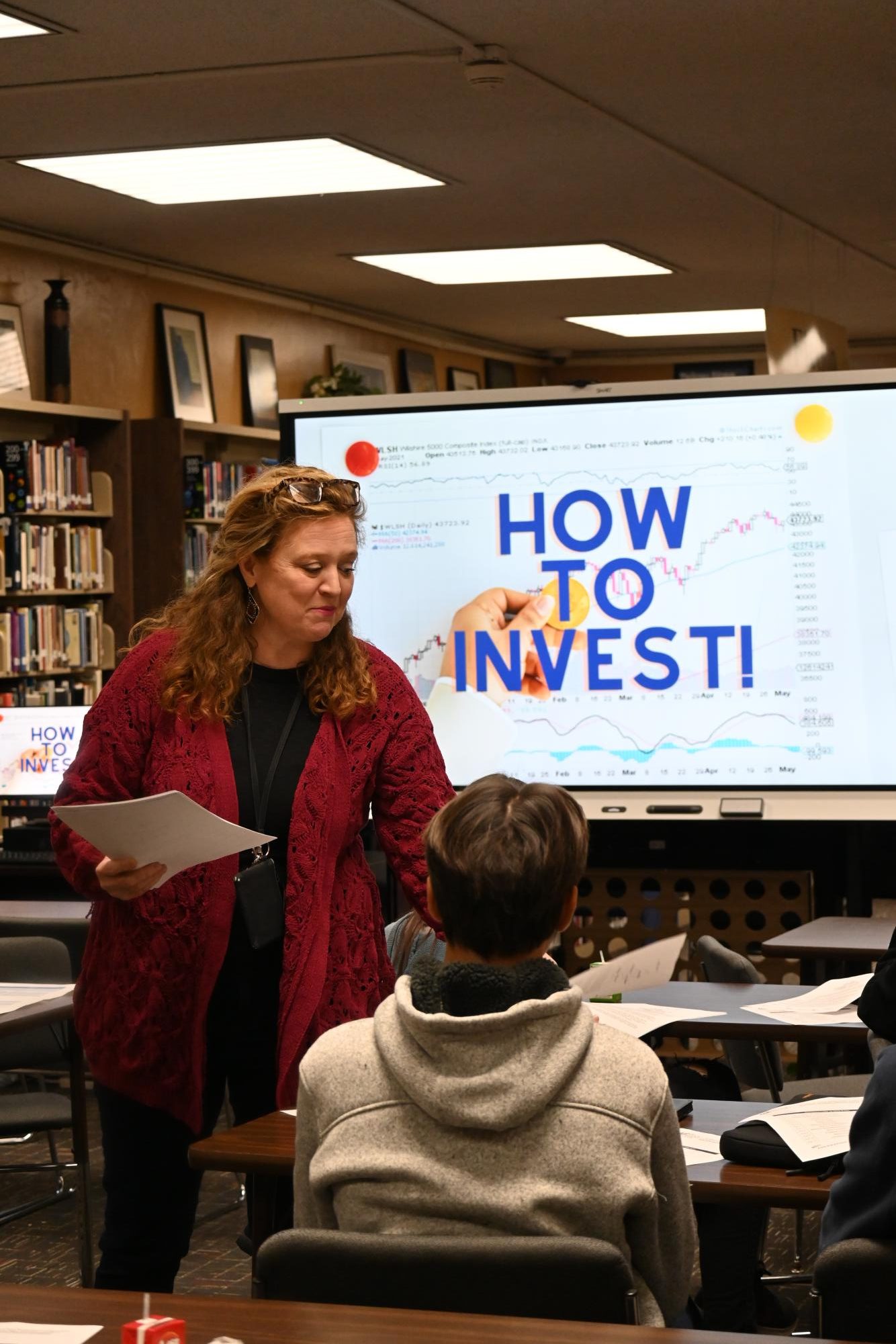
Similarly, for students who want to hone their financial literacy skills, Curtis has begun the process of reestablishing the school’s chapter of The Stock Market Game. With a $5000 grant being used to get new chromebooks for members, Curtis said there is a lot of interest from students hoping to gain experience in the world of investing.
“[When] I had probably 30 kids who have signed up with my Google form, I was shocked,” Curtis said. “I was nervous I wasn’t gonna have enough players.”
An existing resource for students who want hands-on experience in an area they may be interested in is the Makerspace—which Brown has tried. Found in the corner of the library and equipped with a 3D printer, the Makerspace opened in 2023. Every week, students have a space to be innovative and create projects from Valentine’s Day keychains to Thanksgiving cards for nursing homes.
“I really used to be big on making stuff, like programming and all that. So I was thinking, maybe [the Makerspace] would help me to get more physical help with that sort of thing,” Brown said. “They provide the materials. They showed us how to do it, and whenever we made a mistake, they were really kind and helped us correct it.”
The library’s reach does not stay in the confines of campus. By collaborating with the Central Arkansas Library System (CALS) during their Six Bridges Book Festival, the library hosts award-winning authors from across the nation. Other authors, through CALS’ Writers in the Schools (WITS) program, have also spoken to students about what it is like to write your first book.
“Because our school is so well known, we don’t even have to reach out to people. They contact us and say ‘Hey, we want to come help your kids,’” Cameron said.
Whether it be by playing The Stock Market Game or just reading a book, Curtis wants students to know that the library has something to offer for them. Ultimately, she believes that the library works to cater to the students and teachers of the school.
“It’s very intrinsically motivating, helping a student find the right book or… an article that they need—making those connections with the kiddos,” Curtis said. “The most important thing is to create an environment that’s inclusive, that everyone knows that this is their space. This isn’t my library. This is your library.”