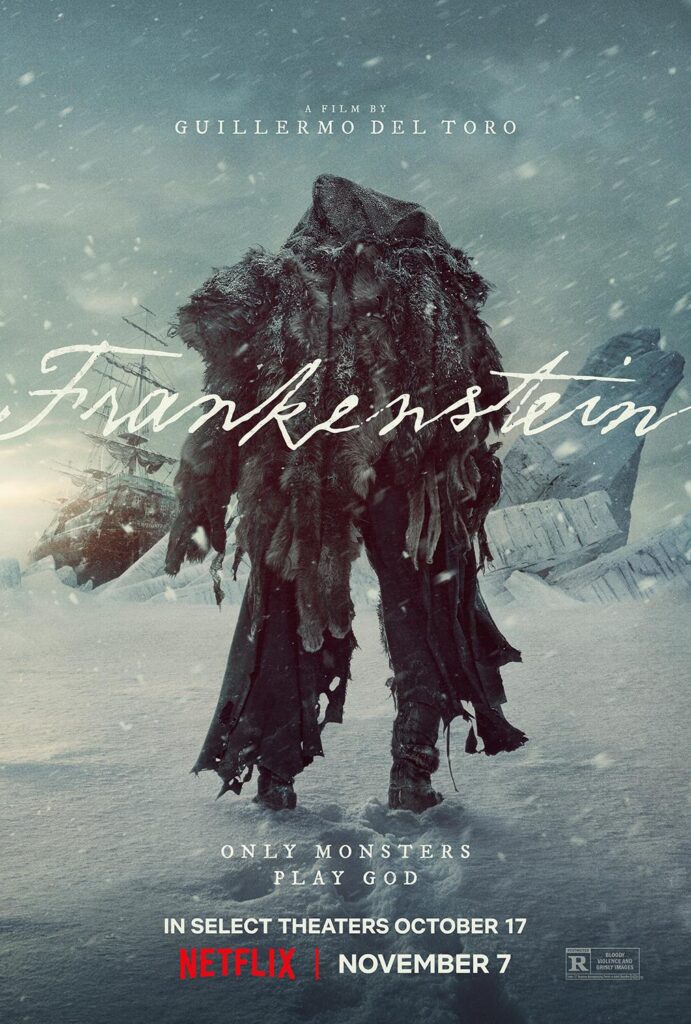
When the newest adaptation of “Frankenstein” premiered Nov. 7, many audiences watched it as another retelling of Mary Shelley’s classic horror story. However, after spending months studying the novel’s themes and critiques, Advanced Placement (AP) English Literature and Composition students viewed the new Netflix release through a different lens.
Students were first introduced to the novel as their summer reading assignment. Additionally, they were told to take notes on the BBC documentary, “Frankenstein: Birth of a Monster,” before starting the book. This film covered Shelley’s life and her writing process. The documentary provided students with more insight into the novel’s major themes and plot points.
Senior Sasha Bogan explains how this supplemented her interpretation of the book. “We got to delve into her life as a person, and that was really important to me,” Bogan said. “It felt like you were learning about somebody through their writing, even though it’s so indirect. It was a woman’s voice, and you can learn about, I guess, motherhood from her eyes.”
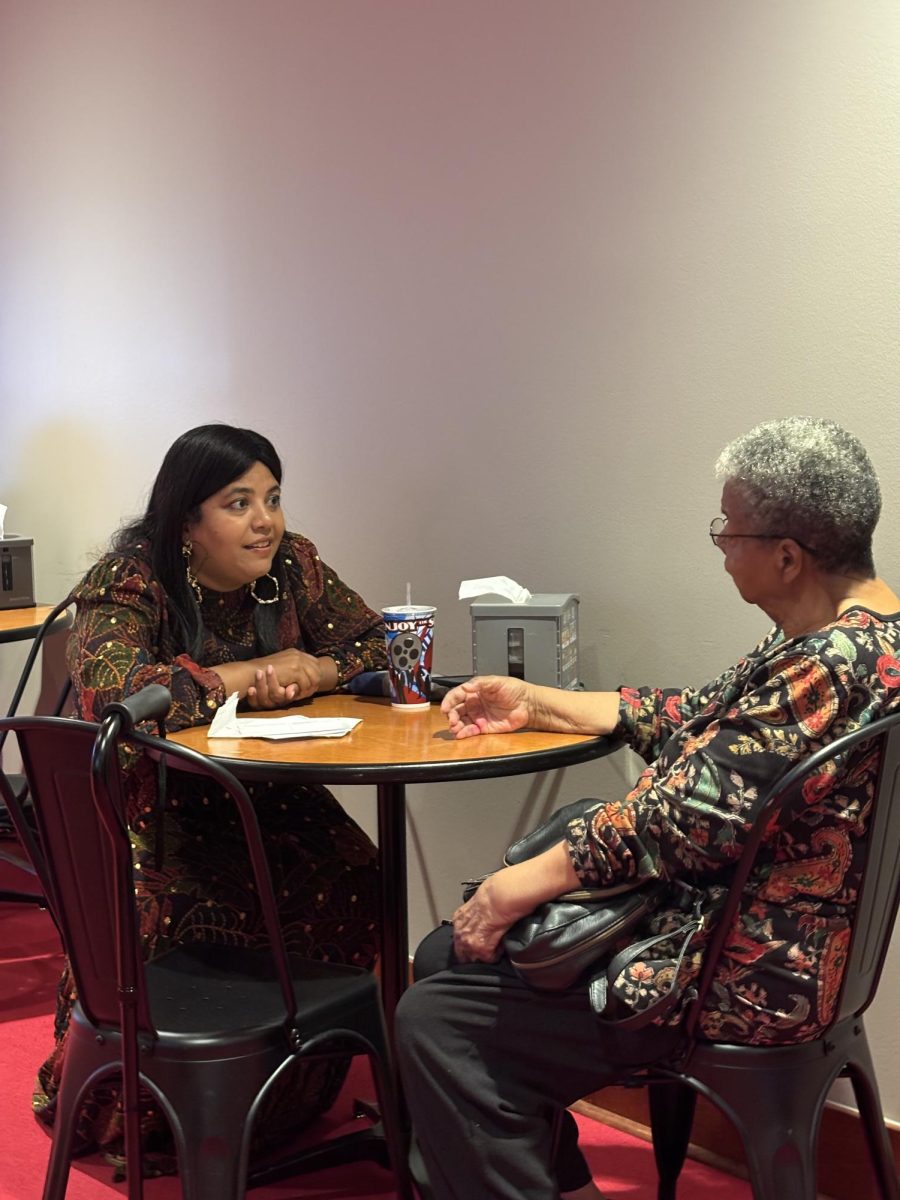
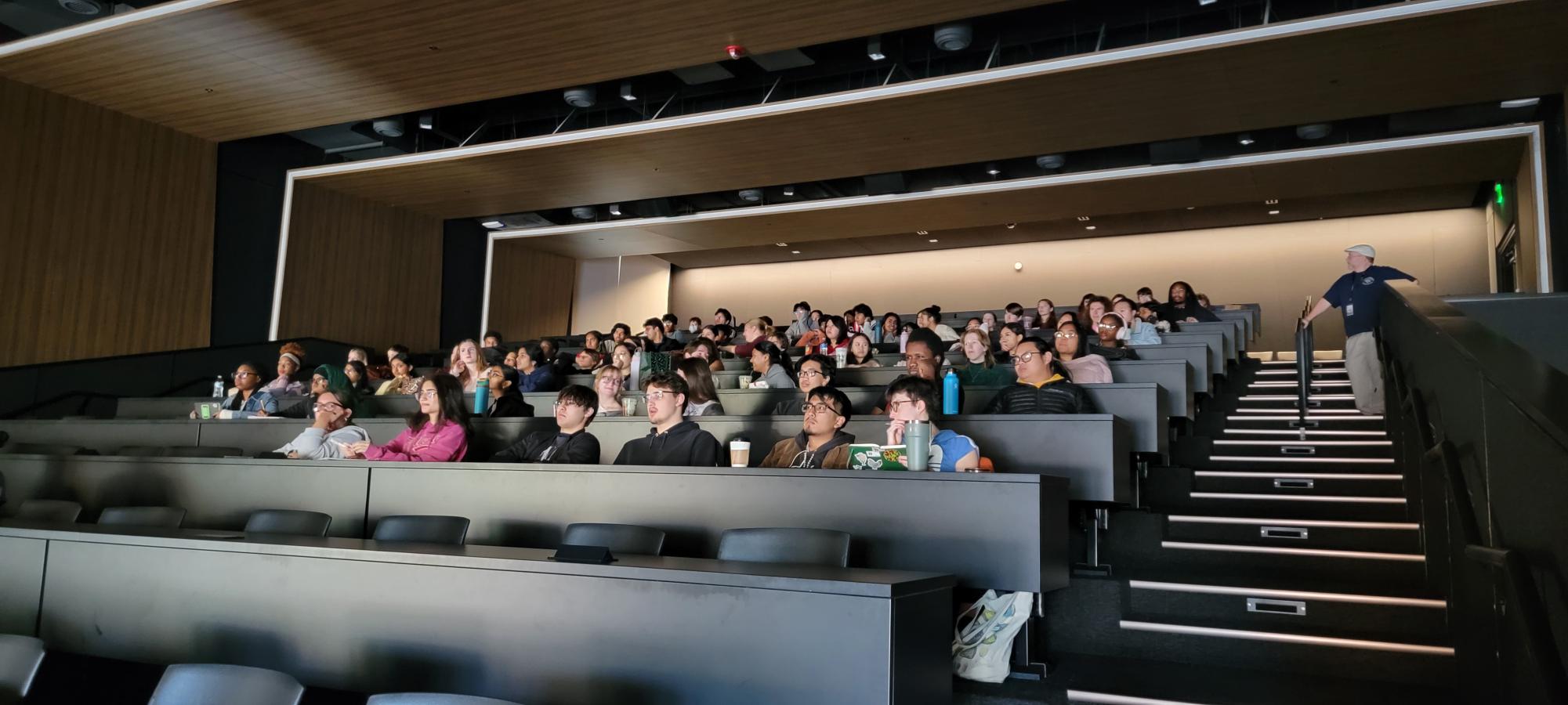
In addition to classroom discussions, students took a field trip to the University of Central Arkansas Sept. 18 to attend a lecture by Dr. Glenn Jellenik, an English professor who spoke about “Frankenstein” and its adaptations. His presentation reshaped how Bogan views modern reinterpretations of the story.
 “It didn’t necessarily change my perspective of the book. If anything, it just made me love it more, but it changed my perspective of media interpretations of literature,” Bogan said. “That brought to my attention the idea that you can see kind of how society is being changed and shaping the literature as it goes, because we interpret it completely differently now than people back then might have interpreted it.”
This shift in perspective became especially relevant when the new “Frankenstein” adaptation, directed by Guillermo del Toro, was released. After their extensive studies, students approached the movie differently than they would have before. Senior Johnathan Alvarez said that the lecture helped him understand the creative liberties taken by the director.
“[The lecture] really just showed me how, you know, some directors take a little bit of liberty…it kind of gives a little bit more perspective on their background and how they saw the story,” Alvarez said. “Because you can come from a different background, the way you see the “Frankenstein” story is going to be completely different from someone else’s. That really opened my mind to see these adaptations as sort of interpretations.”
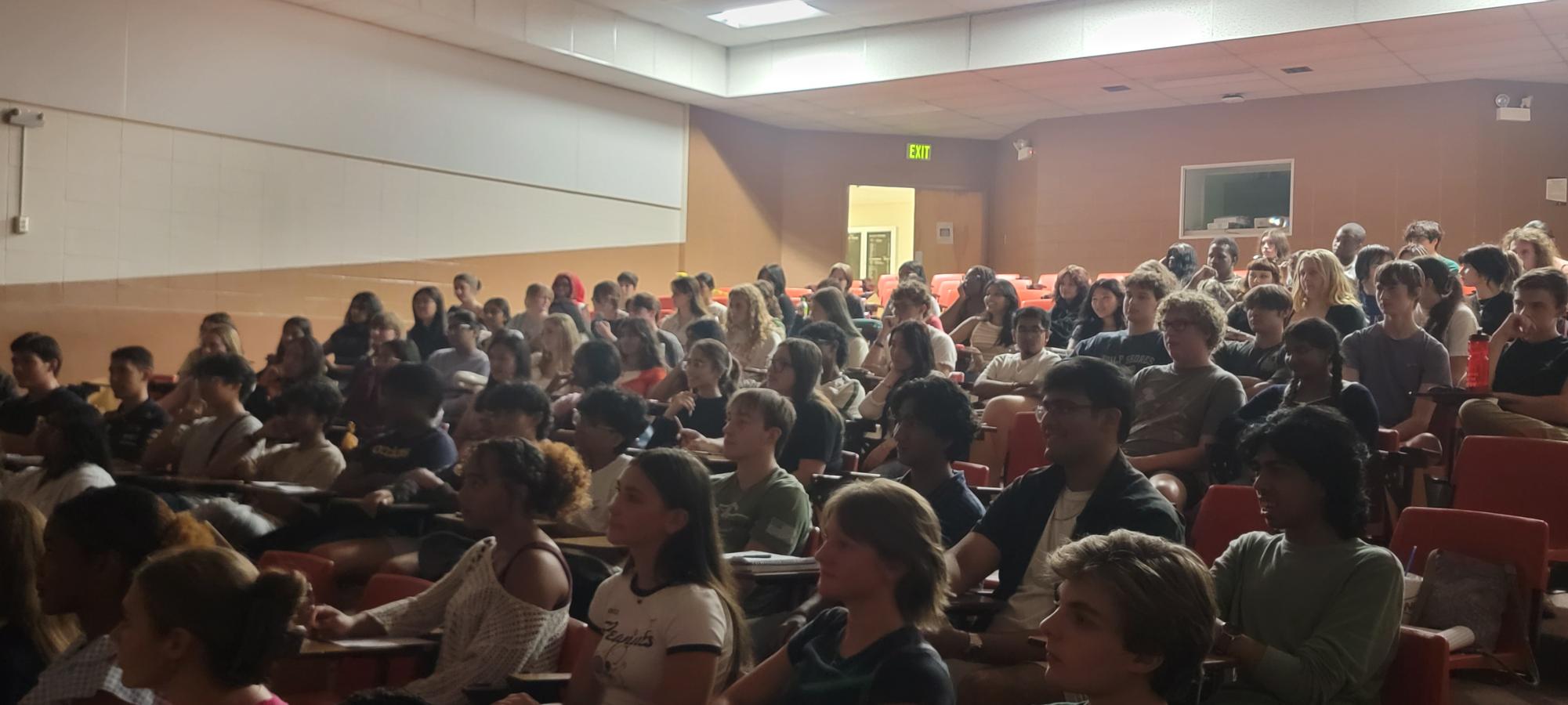
After months of discussion, English teachers Amber McCuien and Scott Hairston hosted a screening of the adaptation in Tiger Hall Dec. 19. Senior Layla Duttenhoffer said that watching the film with her peers amplified her experience.
“It’s really neat to see a movie about something complex when you’re around people who know what it’s about and will appreciate it,” Duttenhoffer said. “It felt like more of a special experience, and it made me look forward to the discussion afterwards because I knew people were going to say some really cool stuff that I never would have thought of.”After the movie, students stayed and analyzed changes made in the film compared to the novel. Duttenhoffer said how costume design of Elizabeth, the female lead, specifically stood out to her.
“I liked how the costumes were able to communicate the character’s connections and traits. And also, [Elizabeth’s] wedding dress: I really liked that because it was like referencing the 1930s ‘Bride of Frankenstein,’” Duttenhoffer said. “It was cool to see the connection between her and ‘Frankenstein’ manifested through the clothing.”
Beyond aesthetics, other students also examined how del Toro’s personal background influenced the movie’s deeper themes.
“Mr. Hairston pointed out that [the director] comes from a Catholic background. And so, whenever I started watching the movie, I kept my eye out for that. I’m also Catholic, so I paid attention to those close details,” Alvarez said. “That’s also why the ending … kind of resonated with me because that spoke a little bit about the theme of forgiveness, which is a major theme in the Catholic contrition phase.”
While “Frankenstein” could have been just another required reading for an English class, it became an outlet through which these students learned the importance of interpretation and critical thinking. This experience left Alverez feeling optimistic about the future of literary discussion.
“Just hearing those perspectives gives me a lot of hope for the world in the future, and knowing that we won’t be confined to these fears of just thinking in one way,” said Alverez.