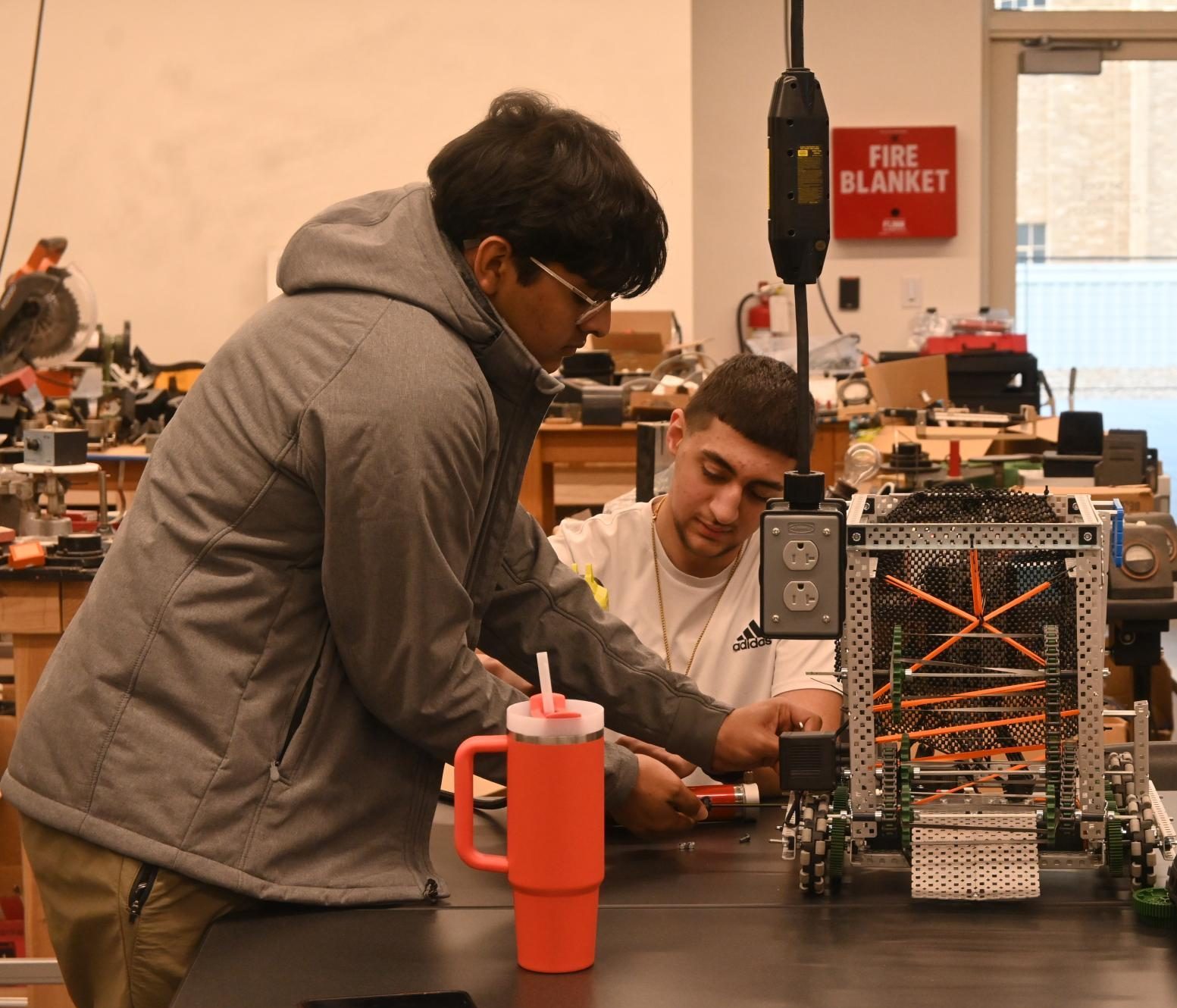
The SECME club, which focuses on robotics and engineering, competes in various competitions across multiple states, where club members have consistently won first-place and best awards. Students are given numerous opportunities to demonstrate leadership and dedication to the club and its projects. Within the club, there is a diverse set of people, which leads to a variety of ideas being shared and numerous opportunities for individuals to apply their creativity and knowledge to tasks and projects. By working through challenges and problems as a team, the SECME club enables students to persevere and strive for excellence in engineering and robotics.
The SECME Club, which stands for Science, Engineering, Communications, Mathematics, and Enrichment, has been at the school for over 15 years. It consists of two main focuses: BEST and VEX. BEST Robotics, short for Boosting Engineering, Science, and Technology, focuses on short-term project management with a level playing field, as each team is given the same materials and parts to build. The other branch, known as VEX Robotics, or Versatile Experiment, involves a purchase-based set of parts with more emphasis on long-term design. From freshmen to seniors, all members of the SECME club have been standing out at competitions, such as the Team America Rocketry Competition and Zero Robotics.
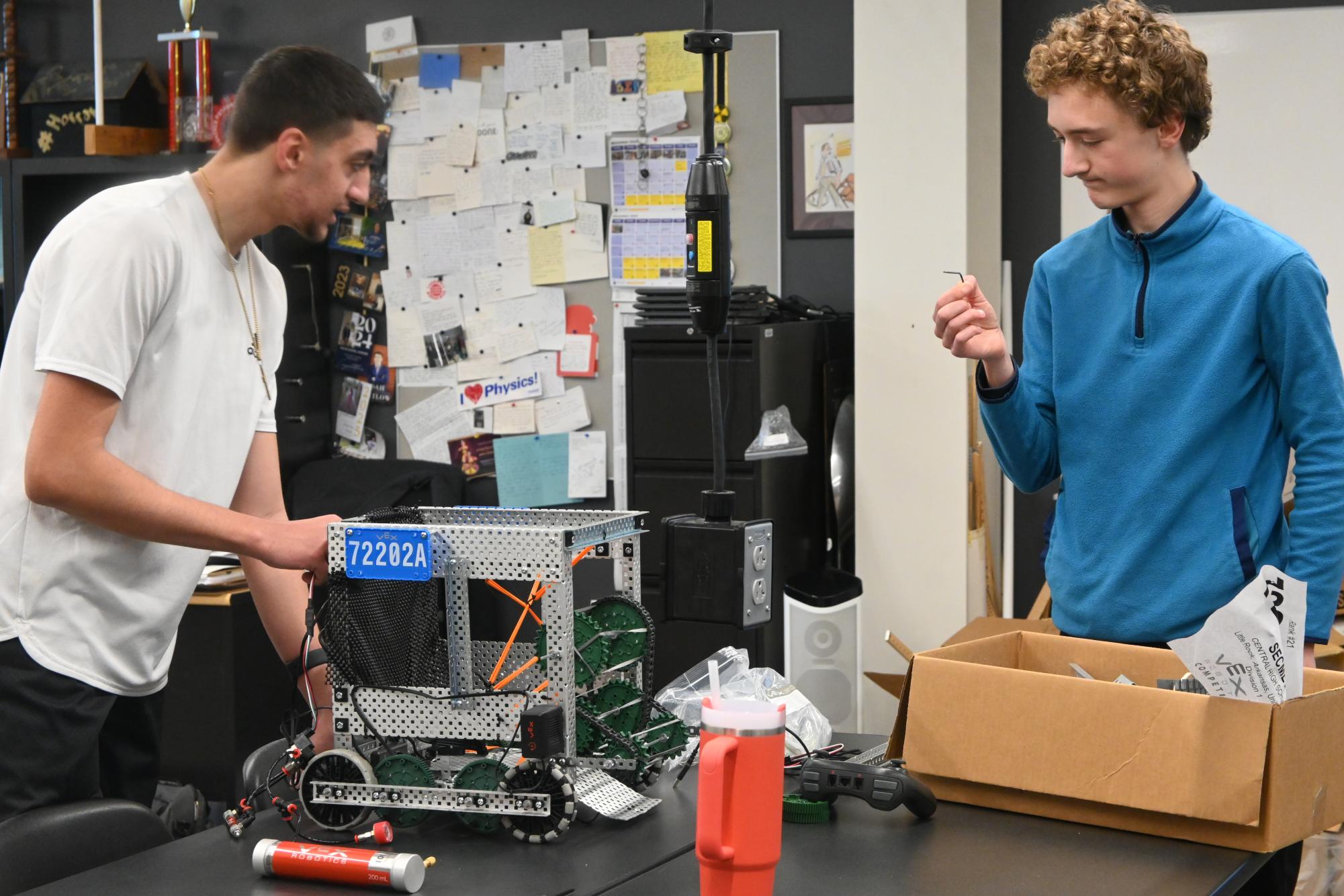
The club’s BEST robotics team received first place at a local meet. They continued their winning streak at the Huntsville, Alabama regional competition, where they won first place in ‘Engineering Notebook.’ The VEX team also won various competitions with a robot named 72202Z, which has been dominating the competition. As co-leader and physics teacher, Mr. Foley notes, the VEX team received top awards and a bid to state for their performance and dedication.
“Our VEX team has been sweeping most of the competitions that they’ve been in. They’ve gotten the top awards for a lot of them, and have gotten a bid to state. So they’ve been winning a lot recently,” Foley said.
When the SECME club is not busy competing, it hosts meetings for members to work on projects for future competitions and experiments with different machinery to improve its projects. To be successful in the club, Mr. Foley believes students need to have collaborative and problem-solving skills in order to be the best.
“Students really need to have an idea of how to solve when presented with a problem, what kind of tools we need to solve that problem, what kind of information that we need, and how to get together with other team members to overcome challenges. That’s really what the club is all about,” Foley said.
Students and leaders, who were dedicated to winning competitions for themselves and the school, returned home with awards from across Arkansas and Alabama—a result of their teamwork and preparation. Students were noticed for their hard work and preparation throughout the season, such as sophomore Neha Suresh Raj.
“It felt exciting. And honestly, most of us were like, we didn’t think we would win, so it was exciting. And people were enjoying themselves,” Suresh Raj said.
With their recent accomplishments, the club is building and preparing for upcoming competitions. Members have applied problem-solving skills and creativity to their projects, while also building teamwork and commitment. As the SECME club continues to grow, students and club members strive to represent our school with the same commitment and dedication they show in competitions. Beyond the club’s academic accomplishments, it has also fostered a welcoming and supportive environment that encourages belonging and collaboration.
“They’re both inviting, and it’s kind of like a community, like a family. Sometimes they would invite us, and they’re nice, and they would help us with stuff when we’re in trouble, and they understand each other, so it’s a good community,” said Suresh Raj