




The line to the bathroom stretches through the hallway, the bell is about to ring, and when you finally get to the front, you see another broken stall. With only seven minutes between classes, students have to decide: use the bathroom and be late, or skip it altogether. For many students, finding a usable and unlocked bathroom has become an everyday struggle.
What should be a simple routine becomes a daily obstacle. Access to the bathrooms has become limited due to strict pass policies, broken or locked stalls, and long lines. This interference has affected students throughout the day, and for some, it has even impacted their academic life.
Sophomore Eve Walker has experienced the ongoing bathroom issues for two years now and expresses how the restroom issues have affected her ability to get to class on time.
“It’s just a lot, and that’s why I’m late to all my classes, most of the time, because I have to wait for 20 people to use the bathroom in the span of 5 minutes while walking to all my classes at the same time,” Walker said.
However, the bathrooms are locked for a reason. Administrators said the behavior inside the bathrooms, such as vandalism, skipping, and fighting, is the leading cause of why they lock them. They also say that monitoring students going in and out of the bathrooms is one of the best ways to prevent the issues from happening.
Another way faculty members have tried to combat these issues is through the pink passes. Hall passes are printed on pink paper, filled out, and issued by teachers to allow students to use the restroom. They include the student’s name, destination, and the time the student left. When students get back to class, the teacher takes it back to prevent people from reusing the passes and wandering the halls unauthorized.
Faculty and students have mixed opinions about the pink passes, but some faculty members have said it has improved accountability compared to the older agenda book method. English teacher Jamie Howe prefers pink passes because she believes they’re more efficient.
“I like the pink passes much better than the agenda books because they’re easy to see, and it gives me a reason to say no to a student going to the bathroom because there’s a limited amount of them,” Howe said.
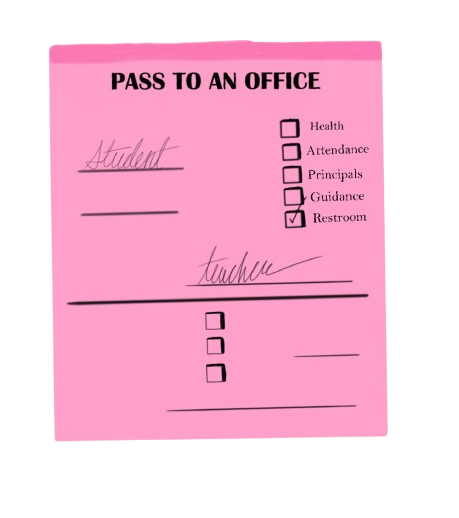
The pink passes have combated some of the behavioral problems regarding the restrooms, but there are still underlying issues with them. Administrators say that the pink passes can be effective if filled out correctly. When teachers use pencils to fill out the passes, the students can erase the information and continue to reuse them, which creates issues.
While staff feel the passes are necessary to protect students, the students feel as if it creates new challenges on top of the already existing ones. Teachers have started limiting the number of passes that students can have, some even limiting it to fewer than three passes a semester.
Sophomore Miles Davenport said that the pink passes aren’t helping any issues at all and believes there are other ways administrators should go about the issues with skipping.
“I don’t like the pink passes. People can just keep them and go to the bathroom or skip whenever they want,” Davenport said. “Whenever I go to use the bathrooms, I feel like I see a lot more people skipping. The teachers should just check the passes, and if they have been out for more than 20 minutes, they’re probably skipping.”
The limiting of both passes and available bathrooms has students like Walker feeling upset.
“It’s extremely misogynistic, especially because girls have periods and a lot more bathroom needs than [boys] do. It’s like they immediately have to go, and girls have more issues than when a guy goes to the bathroom. So it just doesn’t make any sense,” Walker said.
Some teachers, including Howe, share this concern that students’ basic needs should be allowed.
“Even if we have to have somebody posted outside the bathrooms to mediate the flow and make sure they’re clear to go, that’s fine, but we’ve got to give the students a chance to use the restroom,” Howe said.
Despite students’ frustrations, administrators are maintaining these restrictions as deemed necessary to protect the students’ safety. Administrators recognize that students have needs regarding the restrooms, but are having to balance safety in the school on top of those needs. This causes the staff to lock a certain number of restrooms to keep students contained in one spot while still allowing them to use the restrooms.
Howe believes that it is her duty, as well as the rest of the faculty, to protect students’ needs and safety even in places like the bathrooms.
“There should be an adequate number of facilities per student, and students should also feel like they’re in a safe place where they can go in and do what they need to do without feeling compromised or caught in an uncomfortable situation,” said Howe.

