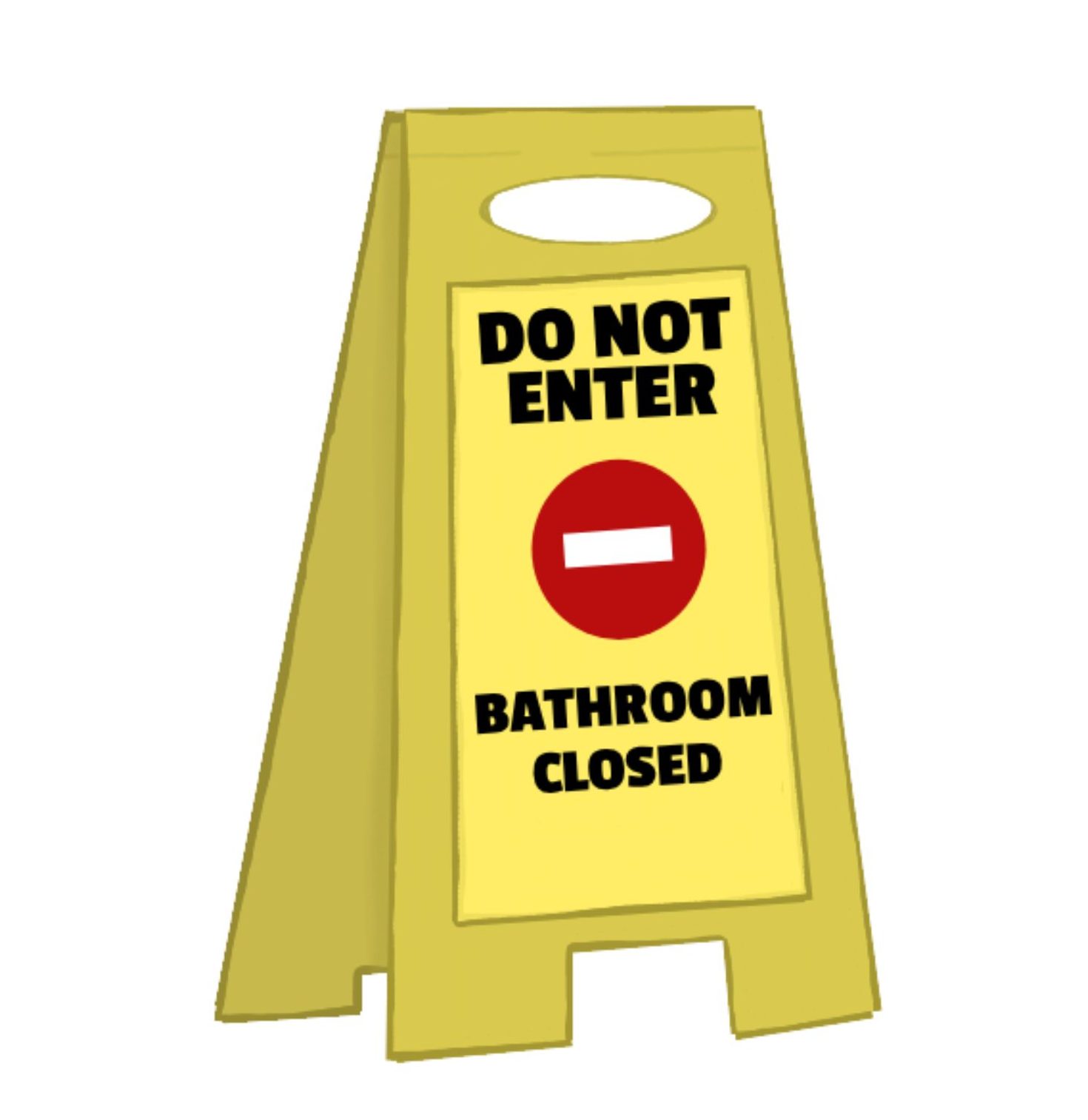
Walking into the bathroom during passing period, I am either confronted with full stalls or a long line of students, unable to get through the crowd. “Maybe I’ll just go during class,” I think. But once my teacher lets me go, I am faced with a locked bathroom door, forced to scurry the floors in search of an open one. “What took you so long?” my teacher asks.
Due to an administrative directive, Nov. 7, students and teachers officially made the switch to disposable pink slips, restricting teachers to a limited number of passes to give out per class. The pink slips were created to combat the growing issue of lingering in the hallway, yet they have only restricted the number of times we are allowed to leave class for the bathroom.
We believe that students who simply need to use the bathroom deserve access, and that the chaos of the situation has not been taken as seriously as it needs to be. We can’t ignore the fact that many students constantly use the bathroom as a way to vape, smoke, or congregate with friends. In addition, students who actually need to use the bathroom often end up being punished for being out for a long time after having to search for a bathroom that is not already occupied.
The underlying issue with the agenda books was that students took advantage of them in order to leave class for extended periods of time, rendering them useless as actual passes. While the switch to the pink slips has led to fewer students in the hallway, the constant loitering in the bathrooms remains a large problem. All too often, I am faced with a group of students standing around the sinks: an awkward experience that leaves me feeling judged for simply needing to use the bathroom.
An additional concern is that the bathroom doors are locked for an unnecessarily long amount of time during classes, pressuring students to journey up and down the stairs just to find an open stall. Even after finally finding one, students are left out of breath, having missed a decent amount of class time.
With such an expansive student body, it is undoubtedly complicated to regulate the bathrooms in a controlled manner. However, these dilemmas can be easily avoided if the doors are both kept unlocked and observed more consistently by monitors who check for passes.