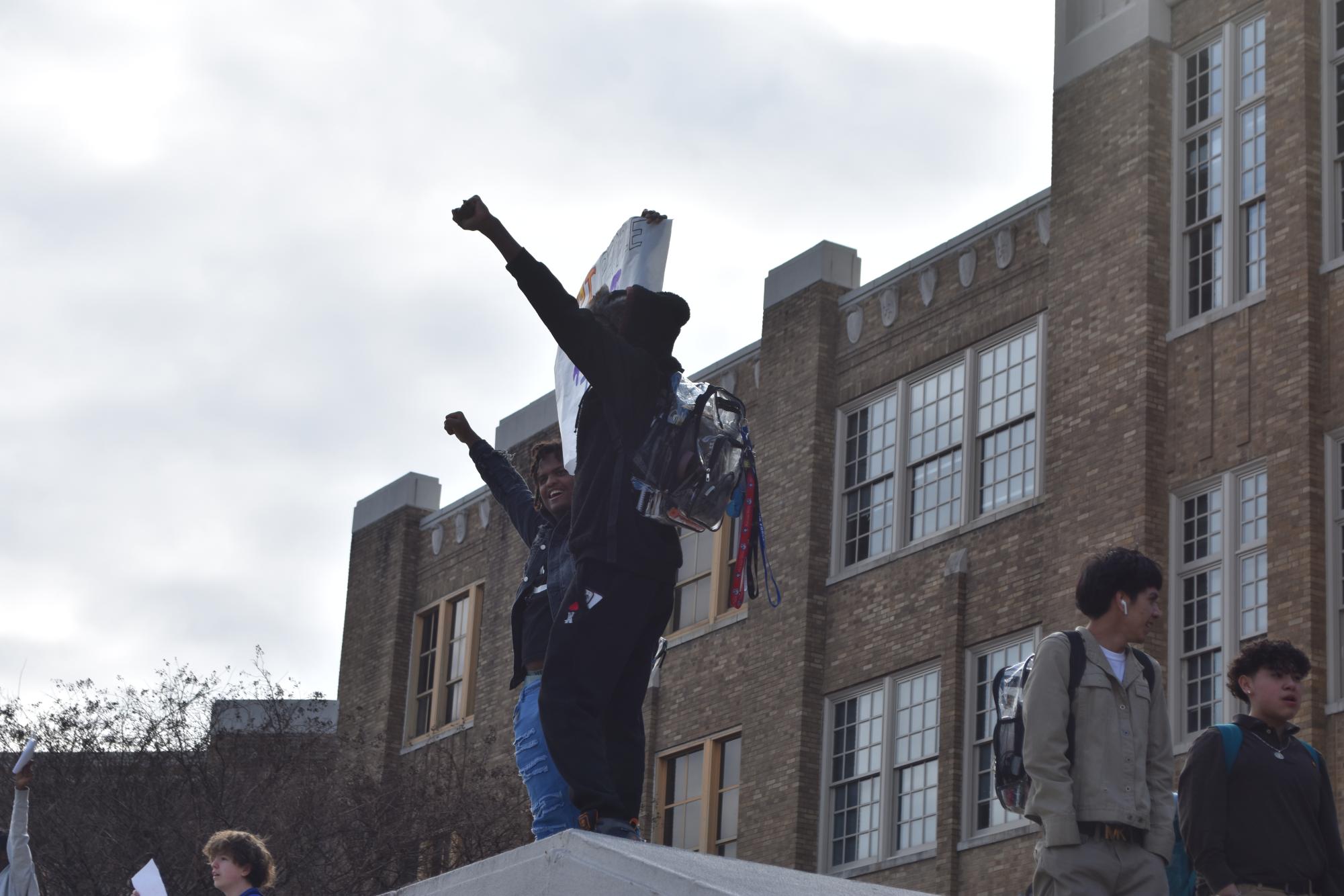
Media outlets can always rely on our students to protest. With our rich history of civic engagement and student activism, we as a student body are always leading the ongoing movement and are expected to protest whenever there are issues facing our community. But within the past few years, our protests have gradually become worse and worse, with escalating violence, implications of disciplinary action, and recent legal restrictions, such as Arkansas HB1512.
Passed in March 2025, HB1512—also known as the Arkansas ACCESS Act—is a bill directed towards educational reform. One of its clauses states that “a public school district or an open-enrollment public charter school shall not grant excused absences for purposes of political protest.” This clause is a major attack on our First Amendment right to assemble. Our protests are held during school hours because many students would not be able to attend at any other time. If held before or after school, students would be limited by bus transportation or extracurricular activities. By not excusing us for protesting during school hours, this restriction limits our voices and makes our attempt to influence legislators weaker.

Not only are our governmental leaders imposing on our right to assemble, but Principal Nancy Rousseau also warned students of the consequences of walking out. In Rousseau’s email to parents on Thursday, Feb. 5, she stated that “students who choose to participate will be subject to consequences.” I planned on walking out that Friday, but after seeing the email, I deliberately did not out of fear of suspension. If I were to face disciplinary action, it would mean not being able to compete at wrestling regionals that weekend and therefore losing the opportunity to go to the state tournament. This threat of punishment personally affects me and other student-athletes and is a form of manipulation that restricts students from making a difference regarding our own future.
Despite the intimidation from academic and legal leadership, students hosted two protests against ICE: one on Wednesday, Feb. 4, and the second on Friday, Feb. 6. However, the walkout fell dramatically below the expectations set by our previous student-run protests. The first one ended before I could even get outside. Security sent all students back into the building due to fights breaking out on the front lawn. Sadly, this isn’t the first occurrence of violence from our walkouts; last year’s protest against President Donald Trump’s reelection ended due to fights, with many students throwing items into the crowd. The aggressive actions of students upsets me, but it is not the only problem. Many students will walk out just to skip class, and not because they actually care about making a difference. The disorganization completely undermines the cause of the walkout, and it makes the younger generation look foolish.
As a senior, I have seen the changes within our protests in the past four years. The walkout against the LEARNS Act my freshman year was organized by the Young Leftists club and significantly differs from this year’s protest. Leaders of the club informed the staff of the walkout days in advance and had adults sponsoring the protest; the organization ensured the safety of protesters, allowed the students to prepare ahead of time, and targeted people who actually cared about the issue. This year’s protest was unorganized. It was spontaneously posted on Instagram the night before, with word of it spread by mouth the day of, creating mass confusion among students and staff and leaving little time to prepare.
The solution to fixing our problem with disorganization, violence, and inauthentic participation would be to host training workshops. For example, during the Civil Rights Movement, protesters were required to be trained in order to participate. According to “Nonviolence training during the U.S. civil rights movement” from Empowering Nonviolence, organizations like the Congress of Racial Equality (CORE) hosted training workshops where participants learned skills and theories for nonviolent assembly. If our school hosted similar workshops through a club or organization, it would positively impact the safety and effectiveness of our protests. The solution is not instilling fear, but teaching students how to properly protest so that we have the tools necessary to make real change.
While I will be graduating this year, the ACCESS Act also applies to higher education in Arkansas, and therefore will continue to impact other students and me as we continue our academic careers. As my peers and I become adults, the responsibility to change our future is in our hands now, so it is more pressing than ever that we keep fighting for our right to assemble in a safe and effective way.