



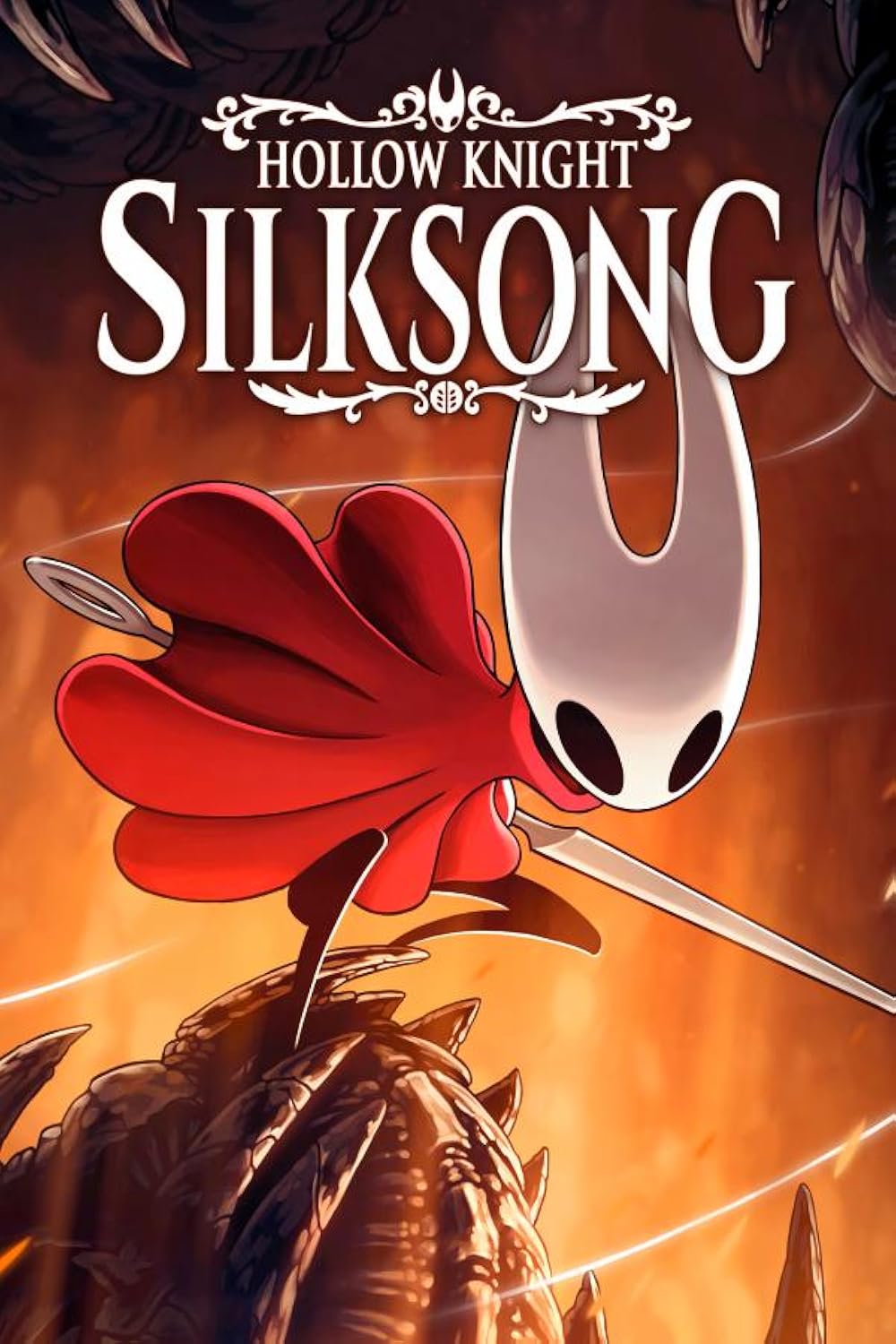
“Hollow Knight” was released on Feb. 24, 2017, by the development studio Team Cherry. The game quickly acquired critical acclaim due to its music, story, art, gameplay, and, most importantly, its exploration. In the game, you play as a little knight who is tasked with exploring the desolate ruins of a fallen kingdom.
Team Cherry began working on more content for the game, focusing on the ability to play as Hornet, a side character from “Hollow Knight,” after the game’s initial release. Originally, this was planned as a Kickstarter DLC (downloadable content) to add to the original “Hollow Knight” game. However, this DLC became too ambitious, so Team Cherry decided to make “Silksong”, a sequel to “Hollow Knight.”
Team Cherry went quiet after the announcement on Feb. 14, 2019, but a demo for “Silksong” was released at a gaming convention later that year. Multiple announced release dates were pushed back or missed, leading to considerable audience distrust. The game didn’t receive major news until 2025, when a surprise trailer was released on Aug. 21, announcing the game would be released a few weeks later on Sept. 4.
The game people have been waiting for since 2019 is finally here. So, was it worth the wait?
Storytime
The story of “Hollow Knight: Silksong” is disconnected from the original game. It follows Hornet’s journeys through a kingdom known as Pharloom after the events of “Hollow Knight.” Hornet was kidnapped and brought here in the opening sequence, and her goal at the start is to escape. As she journeys through the new world, she learns more about the origin of the darkness that has taken over these lands, and about her own past—the tribe of weavers she originates from. Along the way, she meets fellow travelers journeying up to the citadel at the top of these lands for varied reasons. The story and world-building of this game include a lot of real-world messaging, including using religion as a tool to exploit and abuse a lower class of people, child endangerment, racism, and an overarching theme of hope in dark times.
Ari Gibson and the Art of Silksong
Ari Gibson, one of Team Cherry’s co- founders and the studio’s art director, was tasked with hand-drawing everything you can see in the game. The game itself is absolutely massive, with over 30 areas, each consisting of many different rooms, enemies, backgrounds, and other elements that were all hand-drawn by Gibson. The art style includes realistic fantasy settings and characters that look slightly cartoony, with bold black lines defining their outer features. Every character in the game has a very distinct design, making it easy to remember who everyone is without relying on names. Each region has very different design characteristics and is visually distinct from the others. Yet, they are connected in a subtle transitional way, where you won’t be able to tell you’re moving from one area to the next.
Christopher Larkin and the Song of the Citadel.
Christopher Larkin was the composer behind all the music in “Hollow Knight.” The game’s OST (Original Sound Track) is often regarded as one of the greatest soundtracks composed for a video game. Larkin returned to be the primary composer for “Silksong,” and he has created another extremely well-received soundtrack. Larkin uses instruments like the piano, flute, oboe, organ, harp, marimba, and strings to portray emotions across all environments, battles, and interactions in the game. The team hired an orchestra to make all the music, which is new for Larki, as he had previously made the music either by himself or with computer software. The soundtrack itself is very unique. One of the more noticeable examples of this is the song “Widow,” which plays during the fight with the character Widow herself. Widow is using her strings to tear up the bell tower you are in and throw the surrounding rubble at you. Accompanying this fight is a song entirely made with string instruments. Another example of using certain musical instruments to portray an emotion is “Bilewater.” An area that is often regarded as one of the most dangerous in the game is followed by slow, somber piano music, showing a deeper, sadder reality about what’s actually happening here.
A Masterful Metroidvania, and a Superb Soulslike
“Hollow Knight” and “Hollow Knight: Silksong” are both Metroid-Likes, or Metroidvanias. A Metroidvania is a 2D platformer with plenty of branching paths, though many of them are inaccessible until a later upgrade or item is obtained. This leads to a lot of exploring through previous areas you’ve visited, checking to see if you can find anything you might have previously missed.
What differentiates the “Hollow Knight” series from traditional Metroidvanias is how open they are. “Silksong” and “Hollow Knight” could be considered open worlds with the amount of branching paths the games have, allowing tons of early game exploration, and even more backtracking to find things you might not have seen before. A lot of people will complain and not enjoy this major feature of the game, but if you enjoy exploring, I can’t recommend it enough.
“Silksong” is also considered an action platformer and Soulslike. An action platformer could be described as if Mario had a sword. You can jump between platforms, dash over enemies, and use different skills to make your way through the map. The Soulslike genre started from the Dark Souls franchise and is often defined by large enemies that take skill and precision to avoid, alongside brutal punishment, allowing for minutes of progress loss.
A big complaint people have with “Silksong” is the sheer difficulty of some areas and the amount of punishment. A famous example of this is the area Bilewater, which only has two checkpoints spread throughout a large, dangerous zone. This area has major story reasons for being this dangerous, but it can be discouraging to lose 10 minutes of progress to something small you didn’t notice.
Because “Silksong” is an action platformer, Hornet, the character you play as, is granted a plethora of different ways of moving around. This includes a double jump, wall jump, dash, wall dash, wall cling, sprint, float, multiple forms of staying stagnant in mid air, and many more abilities. Hornet is also able to use a ton of different tools, each of which does different things. You are also able to change Hornet’s combat style, completely changing how your attacks work. This, with the combination of over 50 different equipable tools and six different skills, leads to countless different playstyles in the later portions of the game.
Another complaint some people have is the lack of movement and tool availability early in the game. It takes a decent amount of time before getting to the point in the game where customizing what you’re using is something to think about. Still, this encourages exploration to find items that help players overcome the early game struggle.
Something a lot of people have noted is how simple the story seems to be. Similar to “Hollow Knight,” the overarching narrative isn’t directly given to you, and players must go out of their way to find all that’s truly happening. A common complaint of the game is that it can be simple or bland, but that is only when the players don’t go out of their way to find out more.
However, if you enjoy searching for secrets and theorycrafting, there is plenty of story built up, even for some small characters with barely any dialogue.
Overall, the game is effective in what it’s trying to be, but what it’s trying to be isn’t for everyone.


Murray • Jan 13, 2026 at 11:41 am
Yay