



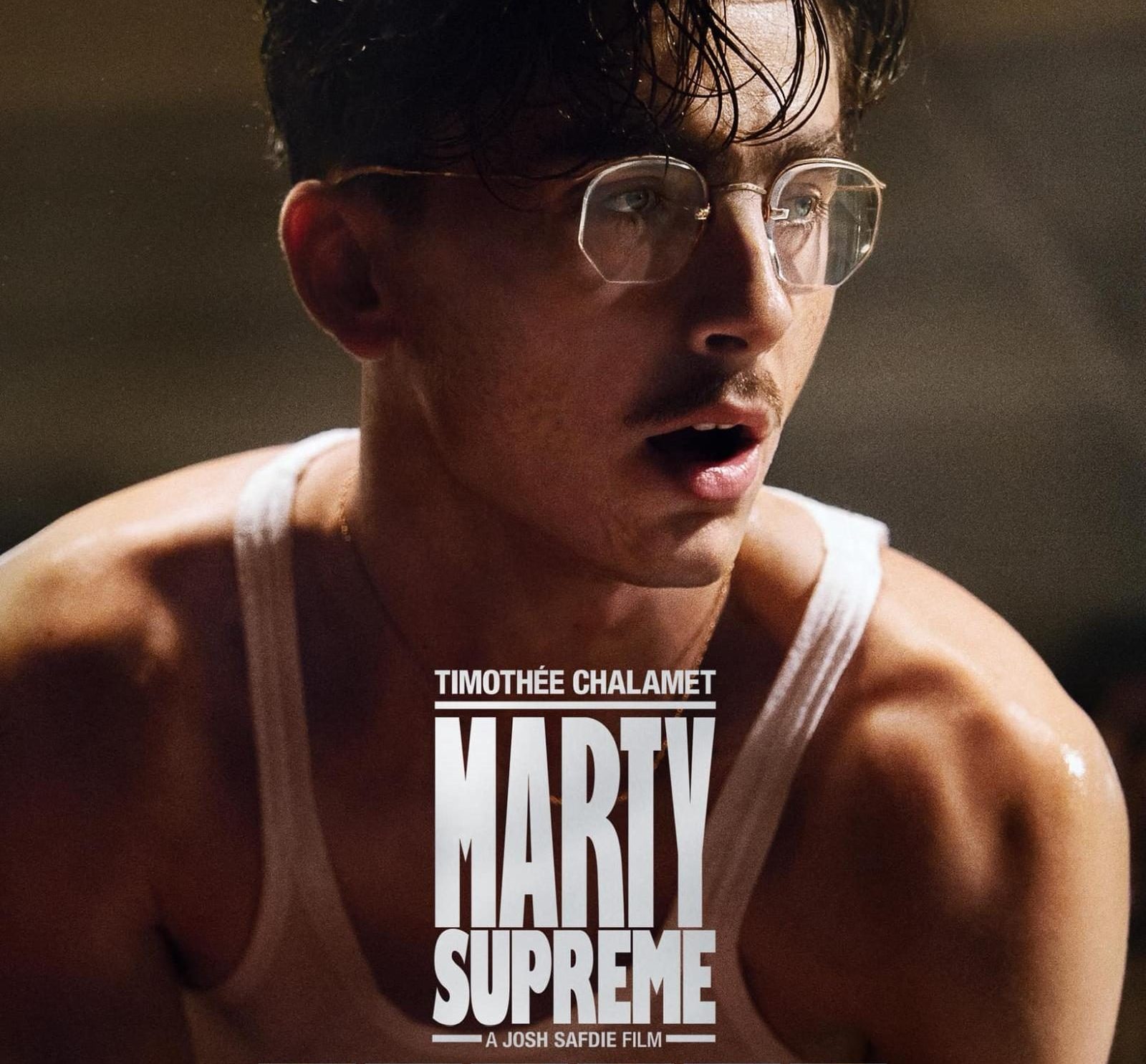
Driven by obsession and consumed by chaos, “Marty Supreme” is director Josh Safdie’s most unrestrained exploration of ambition yet–arriving as a defining moment in his solo career after departing from his brother, Benny Safdie. Released Dec. 25, the film runs for two and a half hours and fills nearly every moment with anxiety-ridden adventure.
“Marty Supreme” follows Marty Mauser, played by Timothée Chalamet, as he attempts to make table tennis popular in America while chasing victory at the British Open. Though the film may have been promoted as an inspiring story about an ambitious ping-pong player, that description is far from accurate. While Marty is undeniably driven, his selfish and manipulative tactics create a multitude of problems that transform the movie from a sports drama into a high-stakes comedy. In his attempt to defeat table tennis star Koto Endo (Koto Kawaguchi), Marty finds himself in messy and violent situations. From being hunted by a gangster, deceiving a fading Hollywood star, and getting his married friend pregnant, audiences don’t get a chance to catch their breath. Grappling with the consequences of his actions, the film concludes with Marty confronting his real-world responsibilities and recognizing the importance of his relationships beyond his desire for greatness.
Despite high anticipation, reactions to “Marty Supreme” have been very divided. On the positive side, the cast, visuals, and soundtrack are phenomenal. With acclaimed actors like Timothée Chalamet and Gwyneth Paltrow, alongside rising talent such as Odessa A’zion and popular music artist Tyler the Creator, it’s no surprise that the performances are dynamic and engaging. Safdie’s direction also stands out, employing his trademark fast-paced editing, self-destructive characters, and striking cinematography. The style closely resembles the Safdie brothers’ earlier films, including “Uncut Gems” and “Good Time.” The soundtrack further enhances the experience, using instrumentals that heighten the emotional intensity of each scene with nostalgic tracks like “Forever Young” by Alphaville and “Everybody Wants to Rule the World” by Tears for Fears, which reflect the film’s time period.
However, regardless of these strengths, “Marty Supreme” has drawn criticism for its storyline. While some viewers enjoyed the continuous pace and deeply flawed protagonist, others felt the narrative was scattered. I agree with critics who pointed to the film’s failure to resolve several of the conflicts Marty creates, leaving the story feeling incomplete. Similarly, some scenes were completely unnecessary to the story and were added purely for shock value. Marty’s ending was unjustified or underdeveloped, as his sudden sense of purpose is barely explored after repeatedly proving himself to be a deeply unpleasant character.
Ultimately, “Marty Supreme” is less about table tennis than it is about obsession, ego, and the cost of unchecked ambition. While the flawed narrative prevents the film from fully sticking the landing, its relentless energy, striking performances, and bold direction make it a shockingly good time for audiences. So if you like abstract characters and constant chaotic energy “Marty Supreme” is the movie for you.


